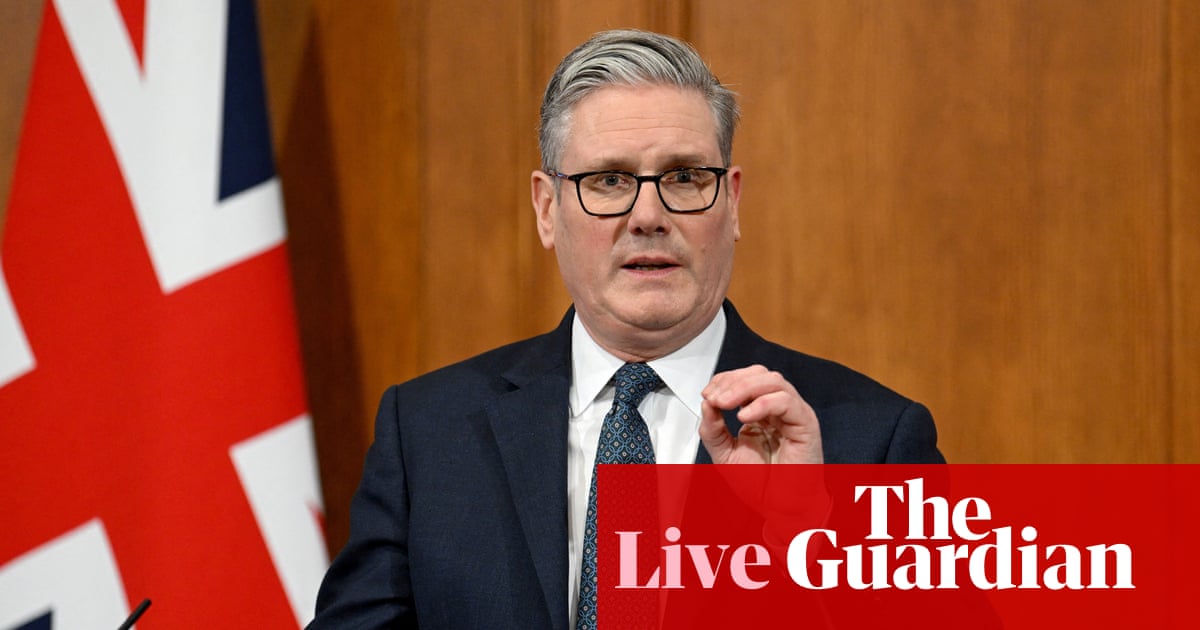
Starmer Details UK Middle East War Response Amid Heightened Drone Threat
The UK finds itself at a critical juncture, navigating the increasingly volatile landscape of the Middle East. As tensions escalate, Labour leader Sir Keir Starmer has stepped forward to provide a crucial update on Britain's evolving strategy, emphasizing both robust defence and the urgent need to protect British lives. His address comes in the wake of significant drone attacks on British military installations and mounting criticism over the UK's preparedness. This detailed account delves into the specifics of the UK's response, the challenges it faces, and the broader implications for national security amidst the ongoing Middle East conflict.
National Address and the Human Cost of Conflict
Sir Keir Starmer's upcoming address underscores the gravity of the situation. Taking to social media, he acknowledged the profound concern felt by people across the UK and the region, stating, “I know that the situation in the Middle East is worrying for people across the UK and in the region.” His message highlighted a dual imperative: ensuring the safety of military personnel and assets, and facilitating the safe return of British nationals. This commitment extends beyond military posturing, touching upon the humanitarian dimension of a rapidly unfolding crisis.
The focus on repatriation efforts is a testament to the immediate human impact of regional instability. News reports indicate that the first repatriation flight has already departed from Oman, a clear sign of the urgency with which the government and opposition are treating the safety of citizens abroad. This aspect of the response, often overshadowed by military deployments, remains a critical measure of a nation's ability to protect its people in times of crisis. For more details on these critical efforts, you can refer to Starmer Confirms Urgent UK Fighter Jet & Repatriation Efforts.
UK Defence Under Pressure: The RAF Akrotiri Incident
The catalyst for much of the recent scrutiny around the UK's Middle East strategy has been the direct targeting of British military assets. Specifically, the Monday night attack on RAF Akrotiri in Cyprus has brought the realities of modern warfare uncomfortably close to home. Cypriot officials confirmed that a hangar at the base was struck by an Iranian-made Shahed drone, reportedly launched from Beirut, Lebanon. This wasn't an isolated incident; two additional drones detected on Monday were successfully intercepted and shot down by British warplanes launched from Akrotiri, demonstrating the immediate threat faced by UK personnel.
This incident has ignited a heated debate about the adequacy of the UK's military presence and readiness in the region. Kyriacos Kouros, the Cypriot High Commissioner to the UK, voiced sharp criticism, stating that a British military presence to defend the island was "the least we expect." He pointed out that other allied nations, including Greece and France, had already deployed significant military assets, including frigates and aircraft equipped for drone combat, to the region with greater urgency. This growing pressure from allies and the direct attack on a UK base have compelled a re-evaluation of Britain's defensive posture in a highly strategic region.
The Defence Secretary, John Healey, has been actively engaged in diplomatic efforts, meeting his Cypriot counterpart, Vasilis Palmas, in Cyprus. The discussions aimed to ease tensions and explore ways in which the UK could further reinforce its air defences to bolster shared security. The very necessity of these talks, coupled with the High Commissioner's remarks, highlights the significant challenge the UK faces in proving its commitment and capability to regional partners. Further insights into this critical assessment of military readiness can be found in UK Military Deployment Faces Scrutiny Amid Middle East Drone Attacks.
The Strategic Importance of Cyprus and Drone Warfare
Cyprus holds immense strategic value for the UK, serving as a vital forward operating base that projects power and influence across the Eastern Mediterranean and into the Middle East. RAF Akrotiri is not merely a base; it's a linchpin for regional stability and intelligence gathering. The use of Shahed drones, known for their relatively low cost and widespread proliferation, represents a significant shift in the tactics of asymmetric warfare. These "kamikaze" drones pose a persistent and difficult-to-counter threat, requiring sophisticated layered air defence systems. The attack on Akrotiri demonstrates that no base, however well-established, is entirely impervious to these evolving threats, demanding constant adaptation and vigilance.
Reinforcing UK Military Assets and International Cooperation
In response to the escalating threats and criticisms, the UK has initiated a significant reinforcement of its military capabilities in the Middle East. The deployment of the Type 45 air defence destroyer, HMS Dragon, to help protect Cyprus, is a key component of this strategy. While its arrival is anticipated next week, critics have questioned the speed of deployment given the immediate threat. To address this urgency, Wildcat helicopters, equipped with advanced anti-drone capabilities, have been dispatched to the island with an expected earlier arrival. These helicopters offer a more agile and immediate response to aerial threats, complementing the broader defensive umbrella provided by larger naval assets.
Beyond Cyprus, the UK's air forces have been actively engaged in defending allies across the region. Foreign Office minister Hamish Falconer confirmed that RAF Typhoon jets flew additional missions on Wednesday night to defend Qatar, while F35s have also been deployed to protect other allies in the Middle East. These deployments underscore the widespread nature of the threats and the UK's commitment to regional security, extending beyond its immediate bases.
The multi-faceted nature of the threats in the Middle East necessitates a collaborative international response. The UK is not acting in isolation; the presence of Greek and French naval and air assets, and reports of Italy, the Netherlands, and Spain also sending naval support to protect Cyprus, highlight a concerted effort by European allies. This collective approach is crucial for sharing the burden of defence, pooling resources, and presenting a united front against regional destabilization. The coordinated deployment of diverse military assets – from high-tech fighter jets and destroyers to specialized anti-drone helicopters – is essential for establishing a robust and resilient defensive network.
Conclusion: Navigating a Complex Geopolitical Landscape
Sir Keir Starmer's commitment to addressing the nation on the UK's response to the Middle East war reflects the critical nature of the challenges at hand. The drone attacks on RAF Akrotiri have served as a stark reminder of the evolving threats in a volatile region, pushing the UK's defence capabilities and strategic agility to the forefront. While criticism regarding the speed and sufficiency of assets has been raised, the ongoing deployment of HMS Dragon, Wildcat helicopters, and fighter jets, alongside active diplomatic engagement and international cooperation, demonstrates a determined effort to bolster security and protect British interests.
The situation underscores the complex interplay of military defence, diplomatic efforts, and humanitarian concerns that define the UK's engagement in the Middle East. As the conflict continues to unfold, the nation's ability to adapt swiftly, project strength, and collaborate effectively with allies will be paramount. For Sir Keir Starmer and the government, navigating this intricate geopolitical landscape requires a clear, decisive, and continuously evolving strategy to safeguard national security and the lives of British citizens both at home and abroad.